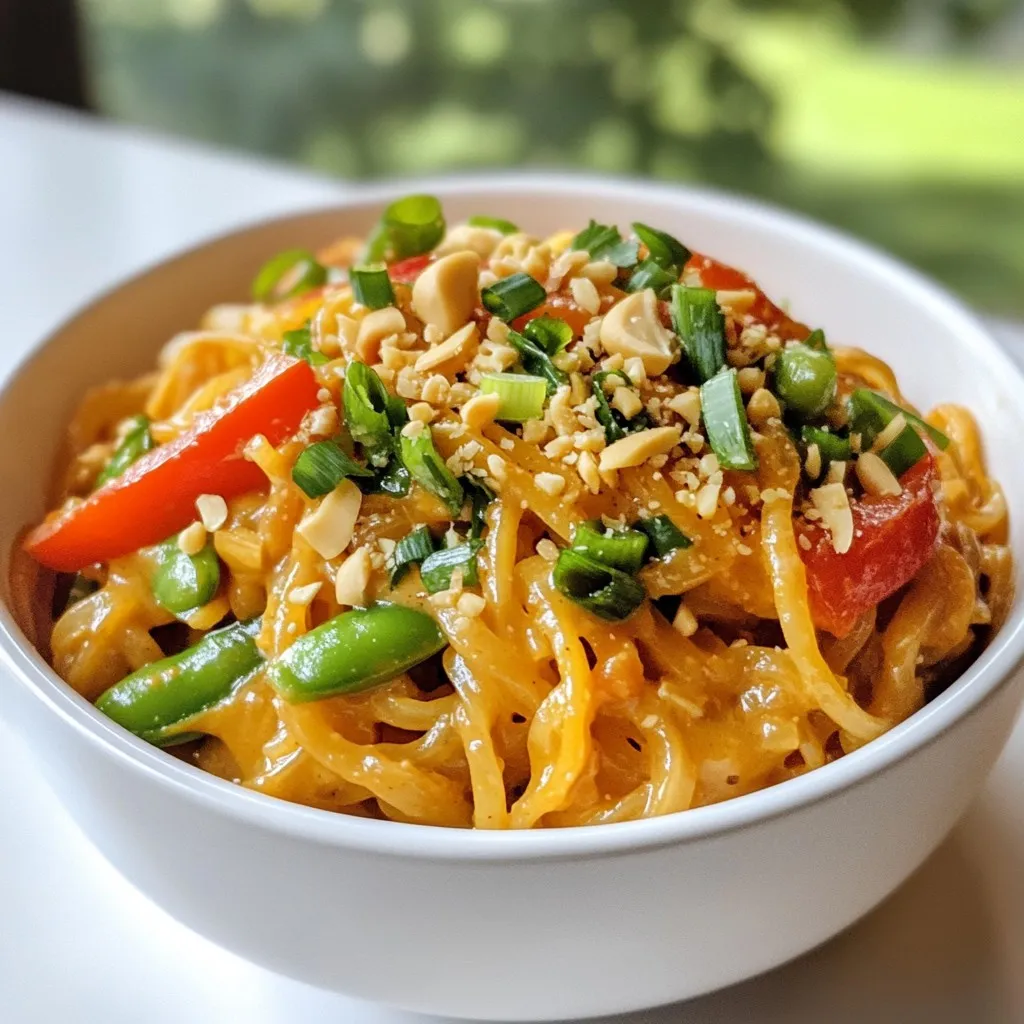
Are you ready for a meal that packs a flavorful punch? Spicy Thai peanut noodles are simple to make, yet bursting with taste. This dish combines rice noodles, fresh veggies, and a creamy peanut sauce to create a quick dinner that pleases everyone. In this guide, I’ll show you how to whip up this delicious meal, share tips, and explore variations. Let’s dive in and get cooking!
Why I Love This Recipe
- Bold Flavors: This recipe combines the rich creaminess of peanut butter with the zing of lime and the heat of sriracha, creating a flavor explosion in every bite.
- Quick and Easy: With a total time of just 30 minutes, this dish is perfect for a weeknight dinner or a last-minute gathering.
- Colorful and Nutritious: The vibrant mix of vegetables adds not only color but also essential nutrients, making this dish both appetizing and healthy.
- Customizable: Feel free to add your favorite proteins or substitute veggies based on what you have on hand, making it versatile for any taste.
Ingredients
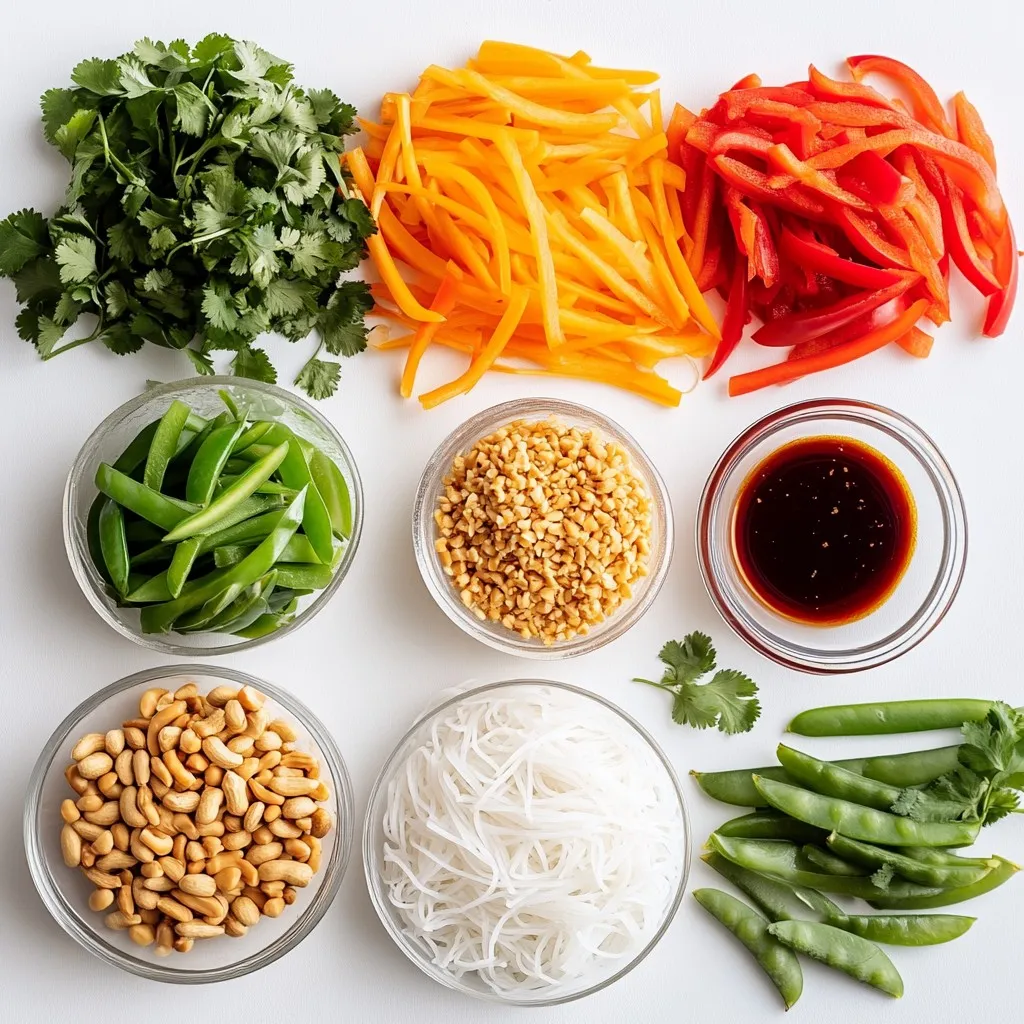
Main Ingredients
– 8 oz rice noodles
– 1 cup bell peppers, thinly sliced (mix red and yellow)
– 1 cup snap peas, trimmed and strings removed
– 1 large carrot, cut into julienne strips
– 3 green onions, thinly sliced
– 2 cloves garlic, finely minced
– 1 tablespoon fresh ginger, grated
– 1/4 cup creamy peanut butter
– 1/4 cup low-sodium soy sauce
– 2 tablespoons freshly squeezed lime juice
– 2 tablespoons brown sugar (light or dark)
– 1 teaspoon sriracha sauce (adjust to taste)
– 1 tablespoon sesame oil
– 1/4 cup chopped roasted peanuts (for garnish)
– Fresh cilantro leaves (for garnish)
These ingredients create a rich and tasty flavor. The rice noodles serve as a great base. Fresh veggies add crunch and color. The peanut sauce is creamy and spicy, bringing everything together.
Optional Ingredients
– Additional garnishes: chopped peanuts, lime wedges, or sesame seeds
– Protein options: grilled chicken, shrimp, or tofu
Adding protein makes the dish heartier. Garnishes enhance the look and flavor. You can mix and match to fit your taste.
Kitchen Tools Needed
– Skillet or wok
– Mixing bowl
– Cooking utensils
These tools help you cook everything with ease. A skillet or wok is best for stir-frying. A mixing bowl is great for blending the sauce. Simple cooking utensils make the process smooth.
Step-by-Step Instructions
Cooking the Rice Noodles
To cook the rice noodles, start by boiling a large pot of salted water. Once the water is at a rolling boil, add 8 oz of rice noodles. Cook them according to the package instructions, usually for 4–6 minutes. You want them to be soft but still slightly firm, known as al dente. After cooking, drain the noodles in a colander. Rinse them under cold water. This stops the cooking and keeps them from sticking together.
Preparing the Peanut Sauce
For the peanut sauce, grab a mixing bowl. Combine 1/4 cup of creamy peanut butter and 1/4 cup of low-sodium soy sauce. Next, add 2 tablespoons of freshly squeezed lime juice, 2 tablespoons of brown sugar, and 1 teaspoon of sriracha sauce. Finally, pour in 1 tablespoon of sesame oil. Mix everything together until it is smooth. If the sauce is too thick, you can add 1 tablespoon of warm water to thin it out. This helps achieve your desired sauce consistency.
Cooking the Vegetables
Now it’s time to cook the vegetables. Heat a tablespoon of cooking oil in a large skillet or wok over medium heat. Add 2 cloves of finely minced garlic and 1 tablespoon of grated ginger. Sauté them for about 30 seconds until they smell great and turn golden. Be careful not to burn them. After that, toss in 1 cup of sliced bell peppers, 1 cup of snap peas, and 1 large julienned carrot. Stir-fry these veggies for 3–4 minutes. You want them tender but still crunchy. This adds nice color and texture to your dish.
Tips & Tricks
Perfecting the Dish
Adjust the spice levels with sriracha. If you like heat, add more sriracha. Start with one teaspoon. Taste the sauce and see how you feel. You can always add more, but it’s hard to take it out. For veggie crunchiness, don’t overcook your vegetables. You want them bright and crisp. Stir-fry them just until tender. This way, they keep their color and snap.
Serving Suggestions
For plating, use deep bowls. This adds height and makes the dish look inviting. The colorful veggies pop against the noodles. A lime wedge on the side can add a fresh touch. When squeezed over the noodles, it gives extra flavor. Pair this dish with a light salad or spring rolls. They balance the meal and add variety.
Common Mistakes to Avoid
Overcooking noodles is a big no-no. Follow the package instructions closely. Aim for al dente, which means they should still have a bite. Burning garlic and ginger can ruin your dish. Sauté them on medium heat and watch closely. It only takes about 30 seconds for them to become fragrant. If you smell burning, it’s too late. Start over to keep your flavors bright and bold.
Pro Tips
- Use Fresh Ingredients: Always opt for fresh vegetables and herbs to enhance the flavor and nutritional value of your dish.
- Adjust the Spice Level: Feel free to modify the amount of sriracha based on your heat preference; start with less and add more as needed.
- Perfectly Cooked Noodles: To avoid mushy noodles, make sure to cook them al dente and rinse with cold water immediately after draining to stop the cooking process.
- Garnish for Flavor: Don’t skip the garnishes! Chopped peanuts and fresh cilantro not only add texture but also elevate the overall taste of the dish.
Variations
Protein Additions
You can add protein to your spicy Thai peanut noodles. Chicken, shrimp, or tofu all work well. If you choose chicken, cut it into small pieces. Cook it in the skillet before adding the veggies. For shrimp, add them when you stir-fry the vegetables. They cook fast! Tofu is great for a plant-based option. Just cube it and sauté until golden brown. This will add flavor and protein to your meal.
Gluten-Free Options
If you need a gluten-free meal, use rice noodles. They are made from rice flour and are great for this dish. You can also try zucchini noodles or quinoa noodles. Both are tasty and keep the dish light. These options let you enjoy the same flavors while avoiding gluten. Just make sure to check labels on sauces for hidden gluten.
Vegan Modifications
To make your spicy Thai peanut noodles vegan, ensure all ingredients are plant-based. Use vegan peanut butter and a soy sauce that is free from animal products. You can also skip the honey and use brown sugar. This way, you keep the creamy taste without any animal ingredients. Enjoy a satisfying meal that’s kind to the planet.
Storage Info
Refrigerating Leftovers
To keep your spicy Thai peanut noodles fresh, use an airtight container. Let the noodles cool to room temperature before sealing. They stay good in the fridge for up to three days. If you can, separate the sauce from the noodles to maintain texture. When ready to eat, you can mix them just before serving.
Freezing Instructions
You can freeze these noodles too! Just pack them in a freezer-safe container. Be sure to leave some space for expansion. They freeze well for up to a month. When you are ready to eat, thaw them in the fridge overnight or use the microwave on low. This helps keep the noodles from getting mushy.
Reheating Tips
When it’s time to reheat, use a skillet over low heat. Add a splash of water or a bit of oil to keep them moist. Stir gently until everything is heated through. Avoid high heat, as it can make the noodles sticky. You can also use the microwave, but cover the dish to keep the moisture in. Enjoy your meal without losing that great taste!
FAQs
What is the origin of Spicy Thai Peanut Noodles?
Spicy Thai Peanut Noodles come from Thailand. They blend Thai and Chinese flavors. This dish is popular for its creamy sauce and spicy kick. In Thai culture, food is more than just meals. It is about sharing and enjoying together.
Traditional variations often use different types of noodles or proteins. Some recipes add chicken, shrimp, or tofu. Others might include fresh herbs for extra flavor.
Can I make this recipe in advance?
Yes, you can make Spicy Thai Peanut Noodles in advance. It’s a great meal prep option. Cook and cool the noodles, then store them in the fridge.
Make the sauce ahead of time too. Keep it in an airtight container. When you are ready to eat, just combine everything. This saves time on busy weeknights.
What other dishes pair well with Spicy Thai Peanut Noodles?
Spicy Thai Peanut Noodles go well with many dishes. Here are some ideas:
– Thai spring rolls
– Grilled chicken skewers
– Fresh cucumber salad
– A light mango salad
These sides add freshness and balance to the meal. Enjoy mixing flavors and textures!
This article covered the key ingredients and steps to make Spicy Thai Peanut Noodles. You learned about the main and optional ingredients, plus the right tools to use. We walked through cooking rice noodles and preparing the peanut sauce. I shared tips to perfect your dish and variations for different diets.
Remember, with practice, you can make this dish your own. Enjoy creating a delicious meal that impresses everyon