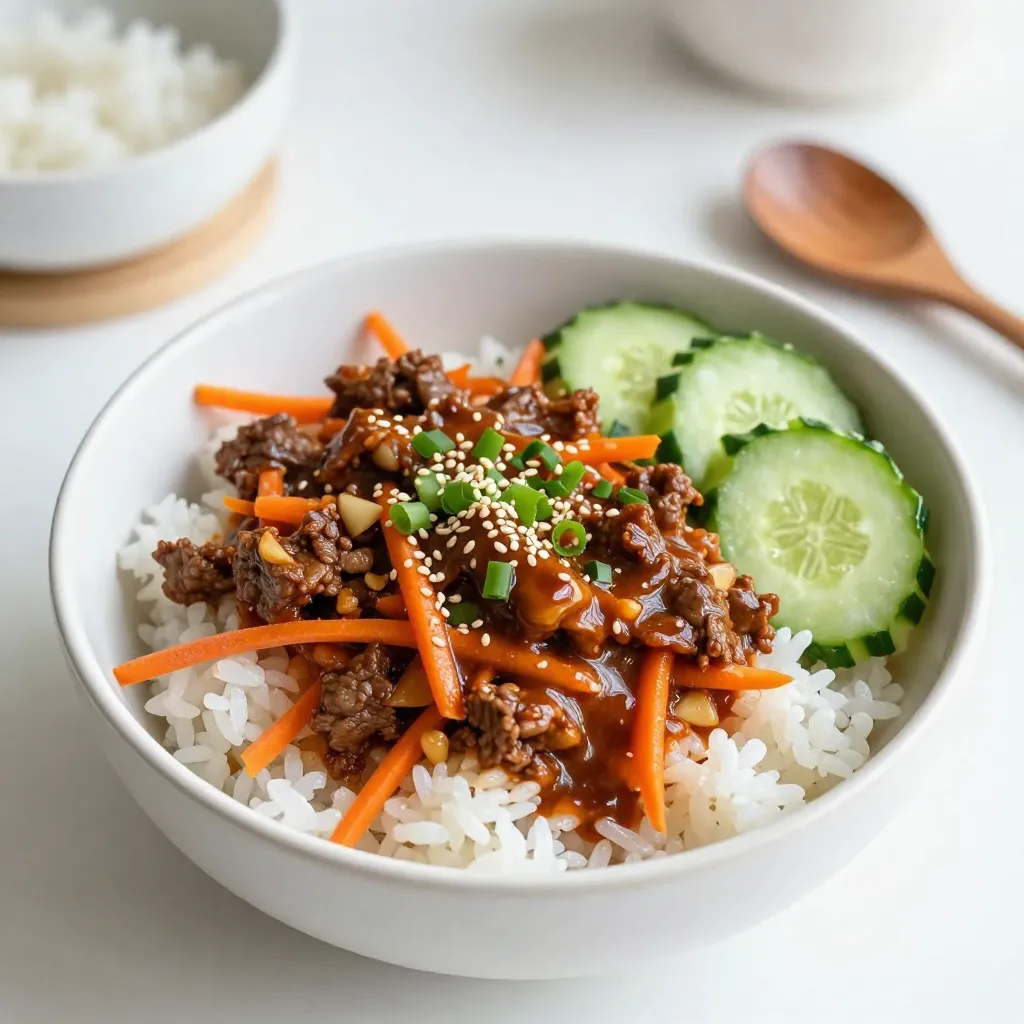
Craving a dinner that packs a flavorful punch? Dive into my Spicy Korean Beef Bowls! This quick dish combines tender ground beef, fragrant jasmine rice, and the perfect kick from gochujang. With easy steps and simple ingredients, you can whip up this Korean delight in no time. Get ready to impress your taste buds and satisfy your hunger with a meal that’s both fun to make and delicious to eat!
Why I Love This Recipe
- Bold Flavors: This recipe combines the rich flavors of ground beef with the spicy kick of Gochujang, creating a dish that is both comforting and exciting!
- Quick and Easy:
- Healthy Ingredients: The addition of fresh vegetables like shredded carrots and cucumbers not only adds crunch but also boosts the nutritional value of the meal.
- Customizable: This recipe is versatile; you can easily adjust the spice level or substitute ingredients based on your preferences or what you have on hand.
Ingredients
Main Ingredients
– 1 pound ground beef
– 1 tablespoon gochujang (Korean red chili paste)
– 1 cup cooked jasmine rice
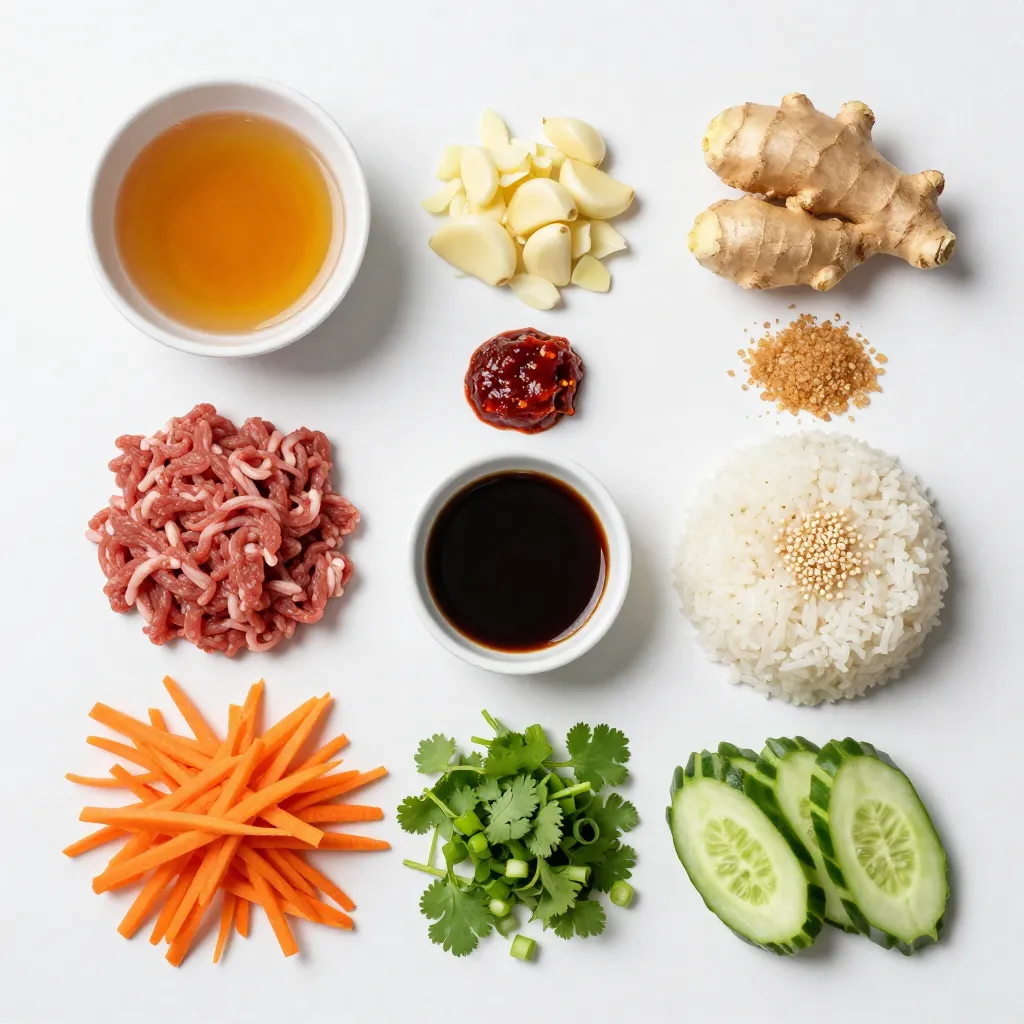
The foundation of this dish is the beef and gochujang. Ground beef cooks fast and absorbs flavors well. Gochujang gives a spicy kick and depth. Serve this over fluffy jasmine rice for balance.
Aromatics and Seasonings
– 3 cloves garlic, finely minced
– 1 inch fresh ginger, grated
– 3 tablespoons soy sauce
– 1 tablespoon packed brown sugar
– 1 tablespoon sesame oil
Garlic and ginger bring aroma and warmth. Soy sauce adds saltiness, while brown sugar balances the heat. Sesame oil finishes the dish with a nutty taste. This mix creates a sauce that clings to the beef.
Toppings and Garnishes
– 2 green onions, finely chopped
– 1 cup shredded carrots
– 1 small cucumber, thinly sliced
– Fresh cilantro leaves for garnish
– 1 tablespoon sesame seeds
Green onions and shredded carrots give crunch and color. Cucumber adds freshness, while cilantro brightens each bite. Sesame seeds add a nice touch. These toppings make your bowl not just tasty, but also pretty!
Step-by-Step Instructions
Preparing the Beef
1. Heating the sesame oil: Start by pouring 1 tablespoon of sesame oil into a large non-stick skillet. Heat it over medium heat until it shimmers. This step adds a rich flavor to the beef.
2. Sautéing garlic and ginger: Once the oil is hot, add 3 cloves of finely minced garlic and 1 inch of grated ginger. Sauté them for about 1 minute. You want the garlic to smell good, but not brown.
3. Cooking the ground beef until browned: Next, add 1 pound of ground beef to the skillet. Use a spatula to break it apart. Cook for 5 to 7 minutes, stirring often. The beef should be browned and fully cooked.
Making the Sauce
1. Whisking together soy sauce, Gochujang, and brown sugar: In a small bowl, mix 3 tablespoons of soy sauce, 1 tablespoon of Gochujang, and 1 tablespoon of brown sugar. Whisk until smooth. This sauce gives the dish its spicy kick.
2. Combining sauce with cooked beef: Pour the sauce over the cooked beef in the skillet. Stir well to coat the beef in the sauce. Cook for another 2 to 3 minutes. This lets the flavors blend perfectly.
Finishing Touches
1. Adding vegetables to the beef mixture: Stir in 1 cup of shredded carrots and 2 chopped green onions. Cook for about 1 minute. The veggies should be slightly soft but still crunchy.
2. Assembling the bowls: Spoon cooked jasmine rice into each bowl. Top with the spicy beef mixture. This creates a hearty meal.
3. Garnishing for presentation: Finally, sprinkle sesame seeds over the beef. Add fresh cilantro leaves and thinly sliced cucumber on top. This makes your dish look vibrant and fresh.
Tips & Tricks
Cooking Tips
– Ensuring flavorful beef: Use fresh ground beef for the best taste. I prefer 80/20 beef for a juicy bite. Sauté garlic and ginger in sesame oil first. This step adds rich flavor to the meat.
– Properly integrating sauce for best results: Whisk soy sauce, Gochujang, and brown sugar until smooth. Pour this sauce over the beef once it’s browned. Stir well to coat every piece of meat. Let it cook for a few extra minutes. This helps the flavors blend perfectly.
Serving Suggestions
– Creative plating ideas: Use colorful bowls or plates to serve your beef. A wooden platter adds a rustic touch. Arrange rice and beef in a way that looks inviting. Add a sprinkle of sesame seeds for a nice finish.
– Pairing with side dishes: Serve with pickled cucumbers or a simple salad. These add a crunchy contrast and brighten the meal. Steamed broccoli or bok choy also pairs well, providing freshness.
Recipe Customization
– Adjusting spice levels: If you like it mild, use less Gochujang. You can also add a bit of honey to balance the heat. For more spice, add extra Gochujang or some chili flakes.
– Vegetable alternatives: Feel free to swap in your favorite veggies. Bell peppers, snap peas, or zucchini all work great. Just make sure to add them at the right time for the best texture.
Pro Tips
- Fresh Ingredients: Use fresh garlic and ginger for a more vibrant flavor in your beef bowls.
- Adjust the Heat: Modify the amount of Gochujang based on your spice preference; start with less if you’re sensitive to heat.
- Rice Variations: Substitute jasmine rice with quinoa or cauliflower rice for a healthier option.
- Meal Prep Friendly: Prepare the beef mixture in advance and store it in the fridge; reheat for a quick meal during the week.
Variations
Alternative Protein Options
You can switch the ground beef for chicken or tofu. Chicken breast works well here. Just chop it into small pieces and cook it until no longer pink. For a plant-based option, use firm tofu. Press it to remove excess water, then cube it and sauté until golden.
Another great choice is turkey. Ground turkey has a milder flavor but absorbs the sauce well. It cooks just like the ground beef. This keeps your meal lean and healthy while still being tasty.
Rice Substitutes
If you want to mix it up, swap jasmine rice for brown rice. Brown rice adds a nutty flavor and is healthier. It takes longer to cook, but it’s worth the wait.
You can also try cauliflower rice. This option is low in carbs and easy to make. Just pulse cauliflower florets in a food processor until they look like rice. Sauté it for a few minutes before serving.
Other grains work too. Quinoa or farro can add a different texture. They are packed with nutrients and give a nice twist to the dish.
Flavor Variations
To play with flavors, add different sauces or spices. A splash of sriracha gives extra heat. You can also use teriyaki sauce for a sweet twist.
Try adding vegetables to the mix. Bell peppers, snap peas, or broccoli can boost nutrition. Just stir them in when you add the carrots. This keeps them crisp and colorful.
Mix and match these ideas. You can create a new dish each time you cook!
Storage Info
Refrigerating Leftovers
To store your leftover spicy Korean beef bowls, let them cool first. Place them in airtight containers. This keeps the flavors fresh and prevents spills in your fridge. Leftovers will last for up to three days. If you want to enjoy them later, consider freezing instead.
Freezing Instructions
For freezing, use freezer-safe containers. Divide the beef and rice into portions. Make sure to leave some space in the container, as food expands when frozen. You can freeze them for up to three months. When you’re ready to eat, thaw the bowls overnight in the fridge.
Reheating Suggestions
To reheat and keep the flavor, the stovetop works best. Heat a skillet over medium heat and add a splash of water. Stir the beef mixture until it’s hot. If you use a microwave, cover the bowl to keep moisture in. Heat in short bursts, stirring in between. This way, you avoid dry spots and maintain the tasty texture.
FAQs
How to make Spicy Korean Beef Bowls from scratch?
To make Spicy Korean Beef Bowls, follow these steps:
1. Heat the Oil: Pour sesame oil into a non-stick skillet and heat it.
2. Sauté Aromatics: Add minced garlic and grated ginger. Stir for one minute.
3. Cook the Beef: Add ground beef to the skillet. Break it apart and cook for 5 to 7 minutes.
4. Prepare the Sauce: Mix soy sauce, Gochujang, and brown sugar in a bowl.
5. Combine with Beef: Pour the sauce over the cooked beef. Stir for 2 to 3 minutes.
6. Blend in Veggies: Add shredded carrots and green onions. Cook for one more minute.
7. Assemble the Bowls: Spoon jasmine rice into bowls. Top with the spicy beef mixture.
8. Garnish: Sprinkle sesame seeds, add cilantro leaves, and sliced cucumber.
This dish is quick and takes only about 20 minutes from start to finish.
What can I serve with Spicy Korean Beef Bowls?
You can serve many side dishes with Spicy Korean Beef Bowls. Here are a few ideas:
– Kimchi: This spicy fermented cabbage adds great flavor.
– Steamed Broccoli: A healthy green to balance the meal.
– Pickled Vegetables: Adds a crunchy, tangy contrast.
– Eggs: Fried or poached eggs on top can enhance the dish.
These sides complement the beef bowls well and add more texture and taste.
Can I adjust the spice level of the dish?
Yes, you can easily adjust the spice level. Here’s how:
– Milder: Reduce the Gochujang to one teaspoon or skip it entirely. You can add a bit of honey for sweetness.
– Spicier: Increase the Gochujang to two tablespoons or add red pepper flakes.
You can always taste the sauce before adding it to the beef. Adjust it to your preference.
Is it possible to meal prep this recipe?
Yes! Meal prepping Spicy Korean Beef Bowls is simple. Here are some tips:
– Cook the Beef in Advance: Prepare the beef mixture and store it in the fridge for up to three days.
– Cook Rice Separately: Make a big batch of rice and store it in the fridge or freezer.
– Assemble When Ready: When you want to eat, just heat the beef and rice, then assemble the bowls.
This approach makes for quick and tasty meals throughout the week.
You learned how to make Spicy Korean Beef Bowls from start to finish. We covered key ingredients like ground beef, Gochujang, and jasmine rice. You discovered cooking tips, serving ideas, and ways to customize the dish. Keep leftovers fresh with smart storage and reheating tricks. This dish offers great flavor and flexibility for everyone. Whether you stick to the classic recipe or try new variations, you’ll enjoy each bite. Happy cookin